Source outdoor waterproof led display panel for Advertising Events
Compare 28 outdoor waterproof led display panel options with varying pixel pitches, brightness levels, and cabinet materials. Buyers can evaluate specifications like refresh rates and IP ratings to select suitable units for advertising, events, and market displays.
Key considerations
Products List


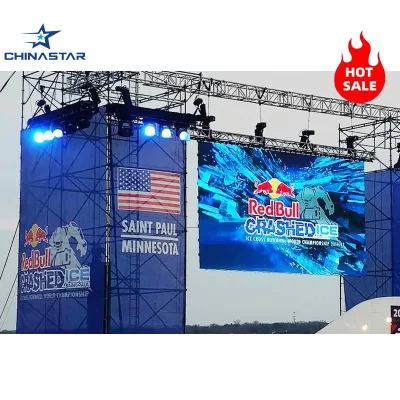


Comprehensive Sourcing Guide
Strategic Sourcing Guide for Outdoor Waterproof LED Display Panels
Procuring outdoor waterproof LED display panels requires a rigorous approach that balances technical performance with environmental resilience. The market offers a diverse array of specifications, ranging from high-brightness video displays to specialized text and image solutions. Buyers must navigate complex attribute sets, including pixel pitch, scanning modes, and power consumption, to ensure the selected hardware meets the specific demands of advertising and public information applications. This guide outlines the critical factors for evaluating these displays, focusing on the observed data points and industry standards relevant to outdoor deployment.
Technical Specifications and Performance Metrics
The core performance of an outdoor LED display is defined by its optical and electrical characteristics. A primary differentiator is the pixel pitch, which dictates the optimal viewing distance and image resolution. In the current market, models such as the OX-P4.81 feature a pixel pitch of 4.81mm, suitable for viewing distances starting at 5 meters. Other configurations, such as the OF-P6 and OX-P6.67, offer varying pitches that influence the clarity of content from different vantage points. For applications requiring closer viewing, such as the OF-P4 model, the viewing distance may be optimized to 4 meters, while other units support distances up to 7 meters.
Brightness is a critical specification for outdoor environments where ambient light can wash out the display. High-performance units typically exceed 6000 nits, with some models reaching over 6500 nits or specifically rated at 6500 cd/m². This high luminance ensures visibility under direct sunlight. The color temperature for these displays generally ranges from 6500K to 9500K, providing a neutral to cool white balance that enhances color fidelity. The refresh rate is equally vital for video content; observed rates include 1920Hz, 3840Hz, and high-frequency options up to 7680Hz. A higher refresh rate minimizes flickering and ensures smooth motion reproduction, which is essential for dynamic advertising content.
Power consumption varies significantly across different models and scanning modes. Units with a 1/16 scan mode may average 350W per square meter, while those with a 1/8 scan mode might operate at 300W per square meter. The voltage requirements are standard for global compatibility, typically accepting AC110-240V inputs. The power supply unit (PSU) often delivers 5V at 60A, ensuring stable operation. The driver IC technology, ranging from constant current drivers to specific brands like Mbi, Icn, Dp, FM, and Cfd, plays a significant role in color consistency and control precision.
Compliance and Certification Verification
For outdoor installations, compliance with international safety and environmental standards is non-negotiable. The supply chain for these displays typically includes certifications such as CCC (China Compulsory Certification), CE (Conformité Européenne), ETL (Intertek), and RoHS (Restriction of Hazardous Substances). While some product listings explicitly mention the full suite of CCC, CE, ETL, and RoHS, others may list a subset such as CCC, CE, and RoHS. Buyers must verify the specific certification status for each unit, as the presence of CE or RoHS alone does not guarantee the full range of safety approvals required for specific regional deployments.
The structural integrity of the display is also governed by standards. The cabinet construction is typically made from aluminum or steel, providing the necessary durability for outdoor exposure. The standard module sizes vary, with common dimensions including 1000mm x 1000mm, 960mm x 960mm, 960mm x 1280mm, and 1024mm x 1024mm. Some specifications also note a module size of 320mm x 160mm for specific configurations. These dimensions impact the overall assembly and the physical footprint of the installation. Additionally, the IP rating is a crucial indicator of waterproofing capabilities, though specific numerical ratings (e.g., IP65) should be confirmed against the product datasheet to ensure protection against dust and water ingress.
Cost Drivers and Pricing Structures
The pricing of outdoor LED displays is influenced by a combination of technical specifications, customization options, and order volume. The observed price range in the market spans from $13.99 to $899, reflecting the diversity of product tiers from small modules to large, high-performance systems. Several factors drive these costs. First, the pixel pitch is a primary cost driver; smaller pitches generally command higher prices due to the increased density of LEDs and more complex manufacturing processes. Second, brightness levels and refresh rates contribute to the cost, as high-brightness, high-refresh panels require more advanced components.
Customization availability is another significant factor. Products marked as "Available" for customization allow buyers to tailor the display to specific branding or functional needs, which can impact the final unit price. The weight of the display, ranging from 35 to 50 kg per square meter, also affects logistics and installation costs. Heavier cabinets made of steel or aluminum require more robust support structures and potentially higher shipping fees. The Minimum Order Quantity (MOQ) typically ranges from 1 to 10 units, offering flexibility for both small pilots and large-scale projects. Buyers should consider the total cost of ownership, including the initial purchase price, installation labor, and long-term maintenance, rather than focusing solely on the unit price.
Typical Applications and Use Cases
The versatility of outdoor waterproof LED panels makes them suitable for a wide range of applications, primarily centered around advertising and public information. The "Advertising" application is the most common use case, where high brightness and vibrant color reproduction are essential to capture attention in busy urban environments. The display functions, including video display, text display, and image & text display, support various content formats. For instance, a market display might utilize text and image combinations to convey real-time pricing or promotional offers.
The viewing distance is a key determinant for application suitability. Models with a 4-meter viewing distance are ideal for indoor-outdoor transitions or smaller public squares, while those supporting 5 to 7 meters are better suited for large billboards or highway-side advertising. The scanning mode, whether 1/8 or 1/16, influences the visual quality and power efficiency, making certain models more appropriate for specific content types. For example, video-heavy applications benefit from the higher refresh rates found in 1/8 scan models, whereas static text displays might perform adequately with 1/16 scan configurations. The choice of application also dictates the required brightness; high-contrast environments demand panels exceeding 6000 nits to maintain visibility.
Supplier Evaluation and Quality Control
Evaluating suppliers requires a focus on the consistency of product attributes and the reliability of the supply chain. Buyers should verify the origin of the products, with China being a noted point of origin for many of these displays. The packing method, typically plywood cases, is essential for protecting the units during transit, especially given their weight and fragility. When assessing quality, the life time of the LEDs is a critical metric, with observed specifications indicating a lifespan of more than 100,000 hours at 80% brightness. The Mean Time Between Failures (MTBF) is another indicator of reliability, with some units rated for more than 50,000 hours.
Environmental resilience is paramount for outdoor units. The operating temperature range should be verified, with observed data suggesting a range of -30°C to 60°C. Humidity tolerance is also crucial, with specifications indicating operation within 10% to 95% humidity. These parameters ensure the display can withstand extreme weather conditions without degradation. Buyers should also inspect the tube chip color, which is typically full color, and the LED lamp type, often SMD 3 in 1, which offers compact design and high efficiency. The contrast rate, observed at 3000:1, is another factor that influences the visual quality in varying lighting conditions.
Long-Term Procurement Considerations
Sourcing outdoor LED displays involves planning for long-term maintenance and operational stability. The system control, often utilizing Nova technology, ensures reliable signal processing and content management. The driver IC technology, such as constant current drivers, helps maintain consistent brightness over the life of the display. Buyers should consider the availability of spare parts and the ease of replacement for individual modules. The standard module sizes facilitate easier maintenance, as damaged sections can be replaced without dismantling the entire structure.
Energy efficiency is a growing concern for long-term procurement. The average power consumption, ranging from 300W to 350W per square meter, impacts operational costs. Buyers should calculate the total energy usage based on the expected operating hours and local electricity rates. The grey scale, observed at 65536 degrees, ensures smooth color gradients and reduces banding, which is essential for high-quality video content. Finally, the procurement strategy should include a review of the supplier's support capabilities, including warranty terms and technical assistance for troubleshooting. By focusing on these long-term factors, buyers can ensure a sustainable and cost-effective investment in outdoor LED display technology.
Comparative Analysis of Key Models
To assist in decision-making, the following table summarizes the key technical differences observed among the listed models. This comparison highlights the variations in pixel pitch, viewing distance, brightness, and standard dimensions, allowing buyers to match the product to their specific site requirements.
| Model Specification | Pixel Pitch | Viewing Distance | Brightness | Standard Dimension | Scanning Mode |
|---|---|---|---|---|---|
| OX-P4.81 | 4.81mm | 5m | >6000nits | 1000mm x 1000mm | 1/16 Scan |
| OF-P6 | 6mm (implied) | 6m | >6500nits | 960mm x 960mm | 1/8 Scan |
| OX-P6.67 | 6.67mm | 7m | >5000nits | 960mm x 1280mm | 1/8 Scan |
| OF-P4 | 4mm (implied) | 4m | 6500cd/m² | 1024x1024mm / 960x960mm | 1/8 Scan |
This data illustrates the trade-offs between resolution and viewing distance. Models with smaller pixel pitches like the OX-P4 and OX-P4.81 are better suited for closer viewing, while the OF-P6 and OX-P6.67 are designed for larger distances. The brightness levels also vary, with the OF-P6 offering the highest luminance, making it ideal for extremely bright outdoor environments. By carefully analyzing these specifications, buyers can select the most appropriate display for their specific application needs.
FAQs
What certifications do outdoor waterproof led display panels have?
These panels typically hold CCC, CE, ETL, and RoHS certifications. Some listings may show a subset like CCC, CE, and RoHS, so buyers must verify the specific status for each unit before deployment.
Which pixel pitch is best for a 5 meter viewing distance?
The OX-P4.81 model features a 4.81mm pixel pitch suitable for viewing distances starting at 5 meters. Other models like the OF-P4 support closer distances of 4 meters while others reach up to 7 meters.
How bright must the display be for outdoor advertising use?
High-performance units typically exceed 6000 nits to ensure visibility under direct sunlight. Some models reach over 6500 nits or are rated at 6500 cd/m² to maintain clarity in bright environments.
Can these displays be customized for specific branding needs?
Yes, customization is available for these outdoor waterproof led display panels. Buyers can tailor the display to specific branding or functional needs, which may impact the final unit price and order requirements.
What is the typical power consumption per square meter?
Average power consumption varies between 300W and 350W per square meter depending on the scanning mode. Units with a 1/16 scan mode may average 350W, while those with a 1/8 scan mode might operate at 300W.
How long is the expected lifespan of the LED lamps?
The observed specifications indicate a lifespan of more than 100,000 hours at 80% brightness. This longevity ensures reliable operation for long-term outdoor installations with minimal maintenance requirements.